

Say Hello!

Scroll


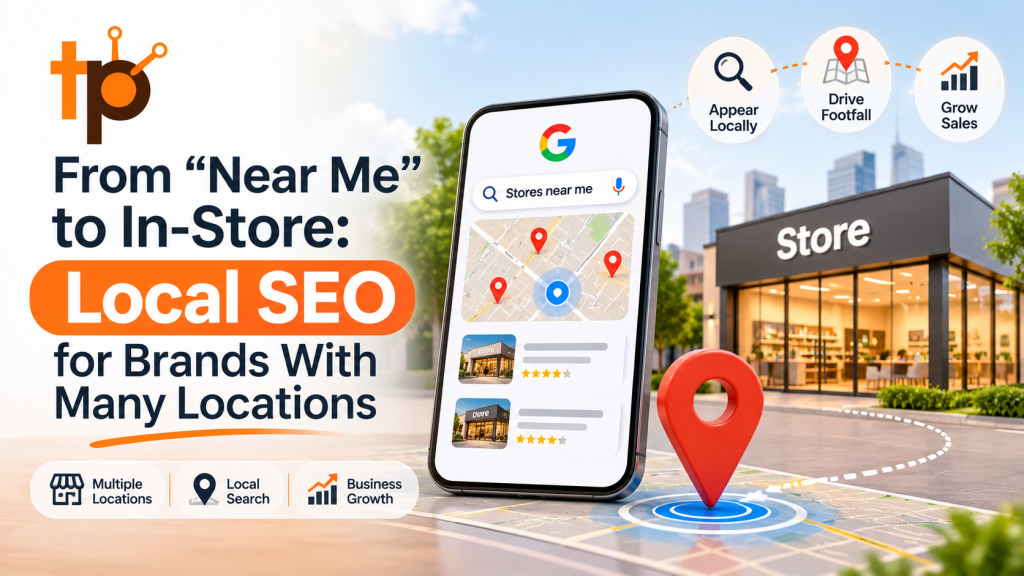
Local SEO for multi-location brands starts with one moment: a shopper is standing two streets away from your store, phone in hand. They search for what you sell. Whether they walk in or walk past depends on what that small map listing shows them.
For retail chains, franchises and service brands, local SEO for multi-location brands is no longer a side project. It is the bridge between online intent and real-world sales.
Why do multi-location brands lose local searches?
The usual causes are small and fixable. Store listings carry old phone numbers. Opening hours differ between the website and the map. Some branches have no photos, no reviews and no posts at all.
Each gap tells a search engine the information may not be reliable. A competitor with a cleaner listing gets the visit instead.
Local SEO checklist for every store location
• ☐ Google Business Profile optimization for every single location, not just the flagship
• ☐ NAP consistency (name, address, phone) across the website, maps and directories
• ☐ Regular posts, offers and fresh photos on each profile
• ☐ A dedicated location page for each store or franchise
• ☐ A plan for gathering and replying to reviews
• ☐ Local and long-tail keywords, such as the product plus the area name
How do location-based ads boost store visits?
Organic listings build trust. Hyper-local targeting adds reach at the moment it matters.
Ads triggered by a user’s proximity to a store reach people who are nearby and already searching. Store visit campaigns can then be tracked separately for each branch. Location-based ads run across search, maps, video and display.
Local SEO case study: Vision Express
Vision Express is an eye-care retailer with more than 160 offline stores across India. Footfall and in-store sales had fallen for 24 months in a row as online competition grew.
The campaign optimised every store listing on Google My Business. It then ran store-specific visit campaigns and served location-based ads to high-intent users near each store. In the first three months, the brand recorded 3.75 lakh+ store clicks and 1.35 lakh+ verified store visits. December 2019 became its highest footfall month in 24 months, with post-visit conversions up 67%.
The work also won Team Pumpkin awards for location-based targeting and performance marketing. More examples like this sit among the agency’s digital marketing case studies.
Which local SEO metrics should multi-store brands track?
Rankings are only half the story. Track these by location:
| Metric | Why it matters |
| Store clicks | Shows interest in a specific branch |
| Direction requests and calls | Shows intent to visit |
| Verified store visits | Links online activity to footfall |
| Post-visit conversions | Connects visits to sales |
How Team Pumpkin approaches local SEO for multi-location brands
Team Pumpkin’s local SEO work covers Google Business Profile optimization and posting, local citations, NAP consistency and location pages for multi-store or franchise brands. Reporting breaks insights down by geography, device and landing page.
The Vision Express case study shows how store listings and location-based ads work together to move footfall.
Brands with many outlets can also explore full local search optimisation services built around local intent.
Frequently Asked Questions
1.Does every store need its own Google Business Profile?
Yes. Each location should have its own verified, accurate profile with photos, hours and reviews.
2.What is NAP consistency?
It means your business name, address and phone number match exactly everywhere they appear online.
3.Can online ads really increase store footfall?
Yes. In the Vision Express campaign, location-based ads drove 1.35 lakh+ verified store visits in three months.
4.What are local citations?
They are mentions of your business name, address and phone number on directories and other sites. They should match your Google Business Profile exactly.
5.Does every store need its own location page?
Yes. A dedicated page for each store helps it rank for searches in that area and gives shoppers accurate details.
Conclusion
Shoppers search first and walk in second. Brands that keep every listing accurate, every location page useful and every nearby searcher in view will win the visit. Team Pumpkin helps multi-store brands do this in every city they serve.