

Say Hello!

Scroll


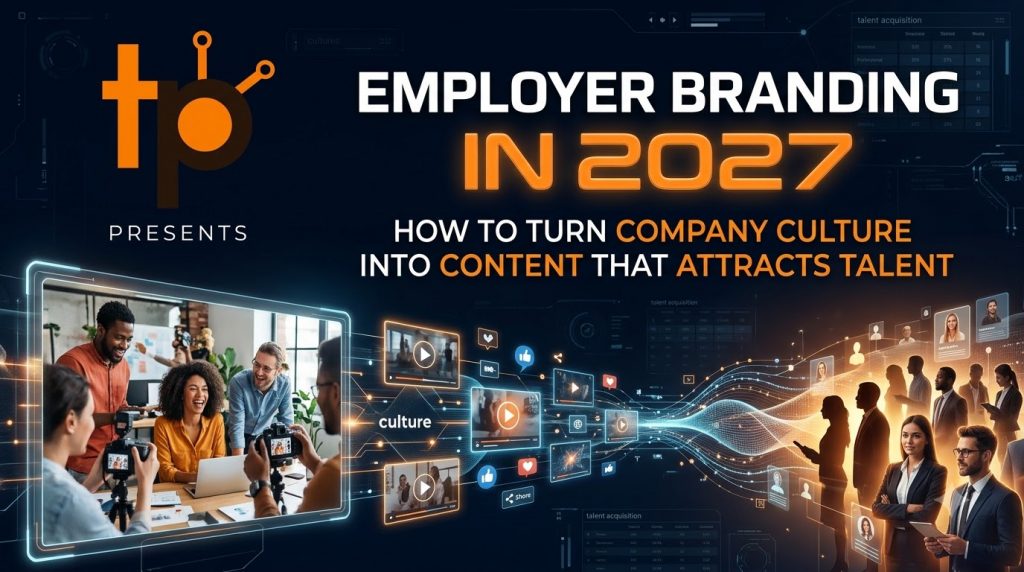
Employer branding is how a company presents itself as a place to work. Strong employer brands show real people, real policies and real moments on social media and careers pages. Candidates trust these stories more than job ads, so the right content attracts better applicants and keeps current staff proud.
Why does employer branding matter more than ever?
Skilled people have choices. Before they apply, many look at a company’s social pages, careers site and employee posts to see what working there feels like.
A job description lists duties. Company culture content shows the team, the values and the way people are treated. That is what convinces someone to switch.
Employer branding myths vs facts
| Myth | Fact |
| Employer branding is HR’s job alone | It needs marketing, leadership and employees together |
| Glossy videos are enough | Real stories and real policies earn more trust |
| It only matters when hiring | It also helps keep existing staff |
| Small firms do not need it | Smaller teams often have the most authentic stories |
A 4-step employer branding framework
Step 1: Define what makes your workplace different
List the values, benefits and habits that are true today, not aspirational. A short list of honest traits beats a long list of buzzwords.
Step 2: Turn policies into stories
A wellbeing policy is a fact. A team member explaining how it changed their week is a story. Look for moments that show values in action, from training sessions to celebrations.
Step 3: Let employees speak
Employee advocacy works because people trust people. Invite team members to share their own posts, behind-the-scenes clips and career milestones, with light guidance rather than scripts.
Step 4: Bring culture to life offline too
Internal events, team leagues and culture campaigns create the moments worth sharing. Brands that want help staging them can look at culture and HR activations as part of experiential work.
Employer branding mistakes to avoid
• Posting stock photos instead of real teams
• Promising benefits the company does not offer
• Talking about culture only when hiring
• Ignoring inclusion and wellbeing
• Sending every candidate to a careers page with no open roles
Employer branding example: an agency that lives its culture
The agency practises what it preaches. Its ZENvironment initiative gives every employee two hours of de-stressing time each day and two no-meeting days a month. The Basics of Business Training programme runs 22 interactive sessions, and the Rainbow Pumpkin Initiative supports LGBTQIA+ team members.
During remote work, a three-month team league kept people across India connected. You can see these stories on the page about life inside the agency.
That effort was recognised when Team Pumpkin won Best Culture in South Asia at Campaign’s Global Agency of the Year Awards 2020.
How Team Pumpkin helps with employer branding
Team Pumpkin brings social, content, video and experiential teams to employer branding. It plans culture content calendars, produces employee stories and runs internal activations, with secure HR apps and workflow tools on the tech side.
With 350+ team members of its own, Team Pumpkin knows how culture content gets made inside a growing company. Candidates who like what they see can browse current openings.
Frequently Asked Questions
1.What is employer branding?
It is how a company presents itself as a place to work, through its values, people, policies and stories.
2.Which channels work best for employer branding?
LinkedIn, Instagram, the careers page and employees’ own social profiles usually work best.
3.How does workplace wellbeing support employer branding?
Real wellbeing policies give candidates proof that the company cares, which is more convincing than claims.
4.Should employees post about their workplace?
Yes, if they want to. Employee posts feel authentic and reach networks the company page cannot.
5.How do you measure employer branding?
Track applications, candidate quality, offer acceptance rates, employee referrals and staff retention.
Key takeaways on employer branding
• Candidates judge culture before they apply
• Real stories and policies beat polished slogans
• Employee advocacy extends reach and trust
• Wellbeing and inclusion are part of the brand
Ready to show people what it is really like to work with you? Start with one honest story from your team this week.