

Say Hello!

Scroll


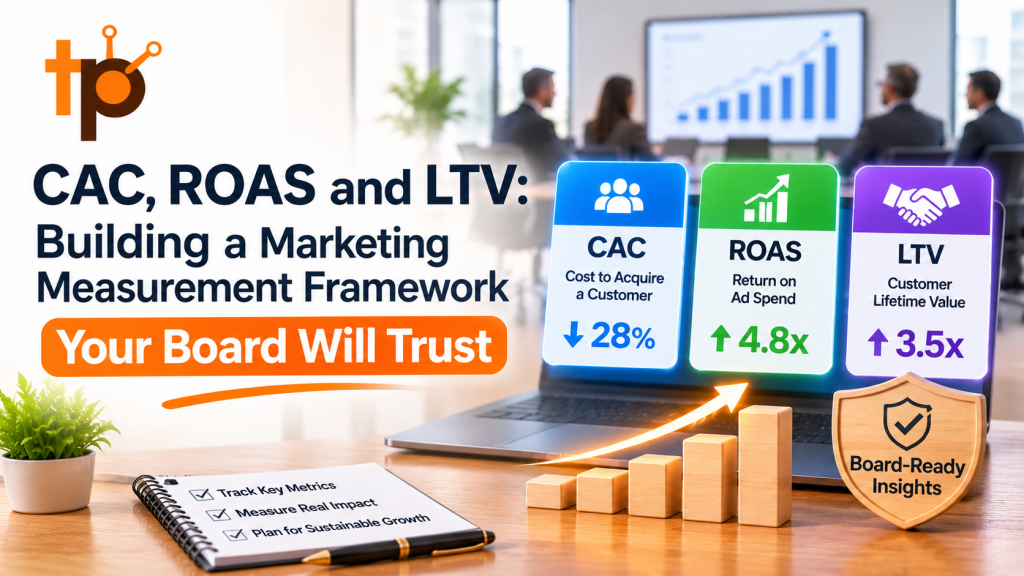
Add up the conversions every platform reports, and the total is often bigger than your actual sales. That is the marketing attribution problem in one sentence. Search claims the order. Social claims it too. So does the email tool.
When every channel takes credit, leadership stops trusting marketing numbers altogether. Fixing that starts with three metrics.
What are CAC, ROAS and LTV, and why do they matter?
| Metric | What it tells you | The question it answers |
| Customer acquisition cost (CAC) | What it costs to win one new customer | Are we buying growth at a sensible price? |
| Return on ad spend (ROAS) | Revenue earned per rupee spent on ads | Which campaigns pay for themselves? |
| Customer lifetime value (LTV) | Total revenue a customer brings over time | How much can we afford to spend to win them? |
Looked at alone, each number can mislead. A campaign with modest ROAS may bring in customers with a very high LTV. A cheap CAC means little if those customers never buy again.
Why does marketing attribution break down?
Buyers rarely convert on the first touch. They see a video, search later, click a retargeting ad, and buy from an email.
Last-click reporting gives all the credit to the final step. That makes awareness channels look useless and pushes budgets toward the bottom of the funnel, until the funnel runs dry.
How to build a marketing measurement framework in 4 steps
1. Agree on one source of truth. Decide which system owns revenue and new customer numbers.
2. Set up tracking across touchpoints. Websites, ads, CRM and marketplaces should feed one data architecture.
3. Choose an attribution model. Pick a model that spreads credit across the journey, not just the last click.
4. Build dashboards by role. Leaders need brand, funnel and LTV metrics. Campaign teams need daily CPA and ROAS.
This is strategy work as much as analytics work. Brands rebuilding how they measure growth often start with marketing measurement consulting before changing any campaign.
How to use CAC and ROAS to reallocate budget
A framework earns its keep when it changes decisions. Run channel audits regularly and reallocate budget based on ROI and customer acquisition cost, not on habit.
New-to-brand customers are worth tracking separately. In one marketplace campaign for Pigeon during the Great Indian Amazon Sale, ROAS reached 13.82. On top of that, 81.14% of orders came from customers who were new to the brand.
How Team Pumpkin approaches marketing attribution
Team Pumpkin builds data architecture for marketing and product analytics. It sets up custom dashboards that track brand, funnel and lifetime value metrics, and uses attribution modelling to make ROAS and CAC clear across touchpoints.
On the media side, Team Pumpkin tracks and optimises campaigns for ROI, with transparent reporting from dedicated campaign managers. Details are on the PPC services page.
Frequently Asked Questions
1.What is a good ROAS?
It depends on your margins and LTV. A ROAS that looks low can still be profitable if customers keep buying.
2.What is the difference between CAC and CPA?
CAC is the cost to win a new customer. CPA is the cost of any chosen action, such as a lead or a sign-up.
3.Why does last-click attribution mislead?
It gives all the credit to the final touch, which undervalues the channels that created the demand.
4.What is the customer lifetime value?
It is the total revenue a customer brings over their whole relationship with the brand, not just the first order.
5.Which attribution model should a brand use?
One that spreads credit across the buying journey instead of giving it all to the last click. The right choice depends on how long your sales cycle is.
Conclusion
Numbers only matter if people trust them. One source of truth, a fair attribution model and dashboards built for decisions turn marketing from a cost line into a growth engine. Team Pumpkin builds measurement frameworks with that goal in mind.