

Say Hello!

Scroll


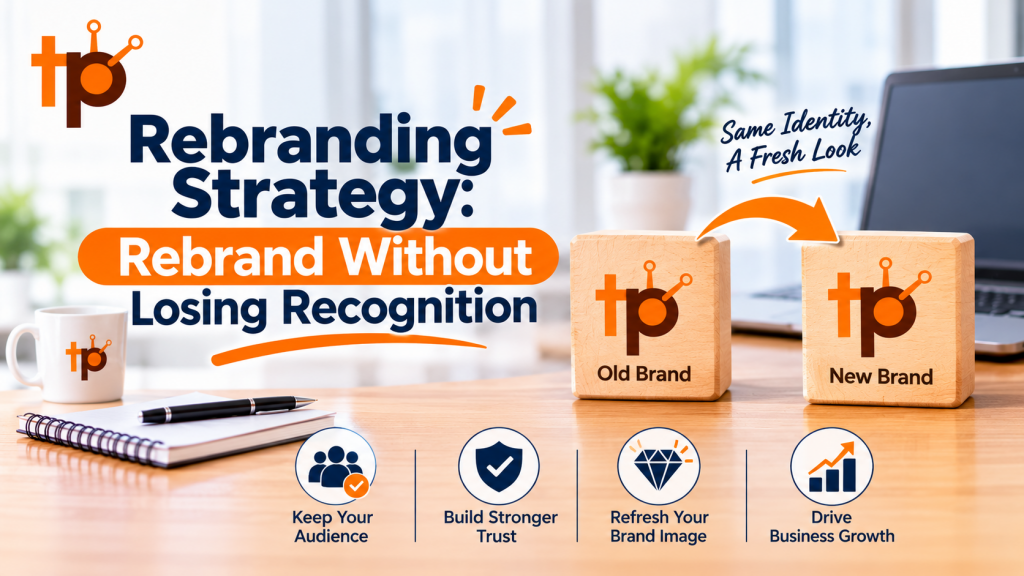
A rebranding strategy starts when the logo that felt bold at launch now looks dated next to newer rivals. The business has grown into new categories, new markets or a more premium price point, and the brand has not kept up.
A good plan fixes that gap without throwing away the trust you have already built. A brand is defined by what people remember, not just by what the company says. The aim is to change what needs changing and protect what people already recognise.
When does a brand need a rebrand?
• The business has moved into new categories or audiences
• You are expanding into global markets
• The brand looks or sounds dated beside competitors
• A pivot, merger or new business model has changed what you stand for
• Customers are confused about what you actually offer
If none of these apply, a refresh of visuals or messaging may be enough.
Step 1: Build your rebranding strategy and positioning
Brand positioning comes first. Map the competitive landscape, then define purpose, vision and values. Build a messaging framework that says who you serve and why you are different.
Skip this step, and the new logo becomes decoration on top of the same unclear story.
Step 2: Build a brand identity system
Brand identity design is more than a logo. It is a full system:
| Element | What it covers |
| Logo and marks | Primary logo, icon, variations for small screens |
| Colour and typography | Palettes and type kits for print and digital |
| Iconography and imagery | Visual style that ties every asset together |
| Motion identity | How the brand moves in video and UI |
| Digital UI kits | Ready components for web and app teams |
| Brand guidelines | Usage rules so every team applies it correctly |
Step 3: Set the brand voice and messaging
Tone of voice, messaging pillars and a sharp tagline make the new brand sound as different as it looks. Founder narratives and leadership tone should match it too.
Step 4: Redesign packaging without losing recognition
For D2C, FMCG and retail brands, the pack is often the first thing customers recognise. A packaging redesign should keep at least one strong cue, such as a colour, shape or symbol, so loyal buyers can still find you on the shelf. Sustainable and premium redesigns can signal the brand’s new direction.
Step 5: Plan the rebrand rollout
1. Tell your own team first, with an internal brand handbook
2. Update the website, marketplaces and social profiles together
3. Launch with a story: why you changed and what stays the same
4. Support the reveal with digital PR and a launch media kit
A rollout that happens in fragments, with old and new logos side by side for months, weakens both. Brands planning a full launch often pair it with PR support for the reveal.
How Team Pumpkin approaches rebranding strategy
Team Pumpkin’s branding practice covers brand strategy and positioning, identity design, voice and messaging, packaging and product branding, and launch campaigns. Team Pumpkin’s creative and strategy teams work under one roof, and the work connects directly to digital, social and performance marketing.
It serves startups and later-stage businesses across industries, from fashion to fintech. The full scope is on the branding services page.
1.How long does a rebrand take?
It depends on scope. A visual refresh is quicker than a full rebrand that includes strategy, packaging and rollout.
2.Will a rebrand hurt SEO?
Not if URLs, redirects and brand mentions are managed carefully during the website update.
3.What is the difference between a refresh and a rebrand?
A refresh updates the look. A rebrand rethinks positioning, identity and voice together.
4.What should brand guidelines include?
Logo use, colours, typography, iconography, imagery style, tone of voice and clear examples of right and wrong use.
5.How should a brand announce a rebrand?
Tell your team first, update every channel together, and launch with a story about what changed and why, backed by digital PR.
Rebranding is a chance to tell people who you have become. Ground it in strategy, build a complete system, and roll it out as one clear story, and recognition grows instead of fading. Team Pumpkin guides brands through every stage of that journey.