

Say Hello!

Scroll


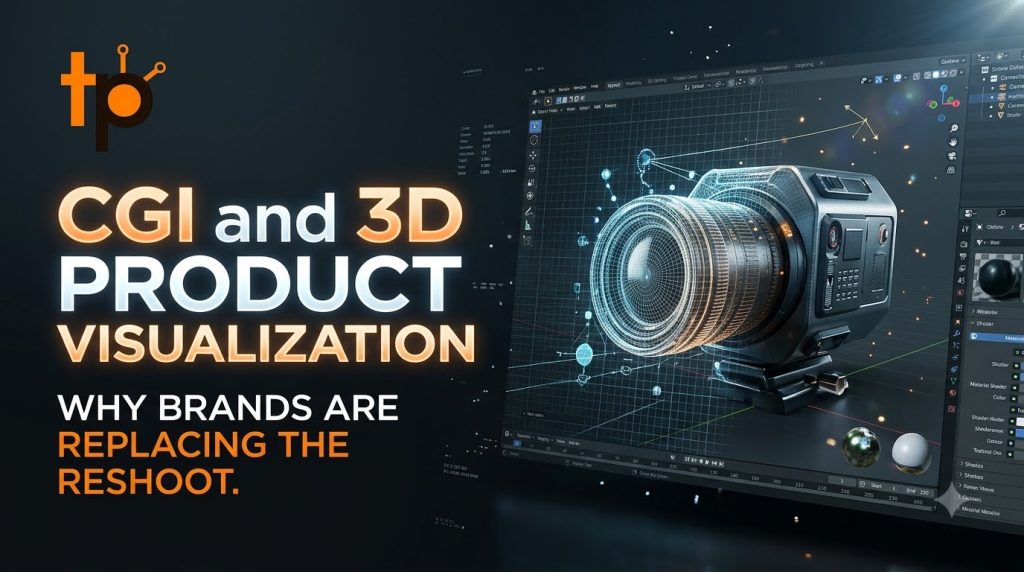
A new colour launches next month. The product is not manufactured yet, the packaging is still being finalised, and the marketplace listing has to go live in two weeks. A traditional photo shoot cannot happen in time. CGI product visualization solves exactly this kind of problem.
This is the kind of problem CGI product visualization solves. Computer-generated imagery creates lifelike visuals from 3D models, so brands can show products, variants and whole brand worlds without waiting for a camera.
CGI vs product photography: which is better for brands?
| Need | Traditional shoot | CGI and 3D rendering |
| New colour or variant | Another shoot | Updated render from the same model |
| Product not yet made | Not possible | Possible from design files |
| 360-degree views | Special rig, many photos | Built from one model |
| Packaging in many languages | New prints and shoots | Label mockups swapped digitally |
| Impossible or abstract scenes | Expensive sets | Created digitally |
CGI can replace traditional product photography, or simply add to it.
5 ways brands use 3D rendering services
1. Ecommerce catalogues. 360-degree product spins and realistic renders for furniture, electronics, fashion and beauty.
2. Packaging and labels. Packaging renders for marketplaces like Amazon, Flipkart and Nykaa, with variant and language testing.
3. Virtual sets and showrooms. Virtual showrooms, 3D event spaces and interactive walkthroughs for real estate and retail.
4. Campaign and motion content. 3D animation for product reveals, ads and mixed CGI with live action.
5. Concept and luxury visuals. Futuristic product concepts and visual metaphors for brand films.
On marketplaces, visuals carry the sale. Clear renders, consistent lighting and detailed close-ups help shoppers trust what they cannot touch. Updating a render is also far quicker than booking a new shoot before a big sale.
Brands growing on marketplaces can pair visuals with listing and A+ content work through marketplace listing support.
How to build a reusable 3D asset library
The biggest saving comes from reuse. One accurate 3D model can feed product pages, ads, packaging mockups, social posts, AR experiences and launch films. Build a shared asset library early, and every later campaign moves faster.
Team Pumpkin’s in-house team of CGI artists, modellers, motion designers and creative directors handles product visualisation, virtual sets and brand worlds, campaign and motion content, packaging and label visualisation, and stylised concept rendering. Scalable asset libraries keep turnarounds fast, and files are delivered animation-ready.
Because Team Pumpkin’s CGI work connects with its campaign, packaging, branding and web teams, the visuals fit the wider brand. Details on scope are on the CGI and 3D rendering page.
Frequently Asked Questions
1.Is CGI cheaper than a product photo shoot?
Often, especially when a brand needs many variants, angles or languages from one product.
2.Can CGI look truly realistic?
Yes. Photorealistic rendering can be hard to tell apart from photography.
3.What files are needed to start a 3D render?
Product design files help most, but models can also be built from reference photos and measurements.
4.What is a 360-degree product spin?
It is an interactive view that lets shoppers rotate a product on screen, built from a single 3D model.
5.Can CGI help with packaging approvals?
Yes. Packaging and label mockups can be tested across variants and languages before anything is printed.
Conclusion: product visuals without the reshoot
CGI turns product visuals from a scheduling problem into a creative advantage. Build the model once, and every variant, campaign and channel gets the visuals it needs, on time. Team Pumpkin builds those asset libraries for brands from day one.