

Say Hello!

Scroll


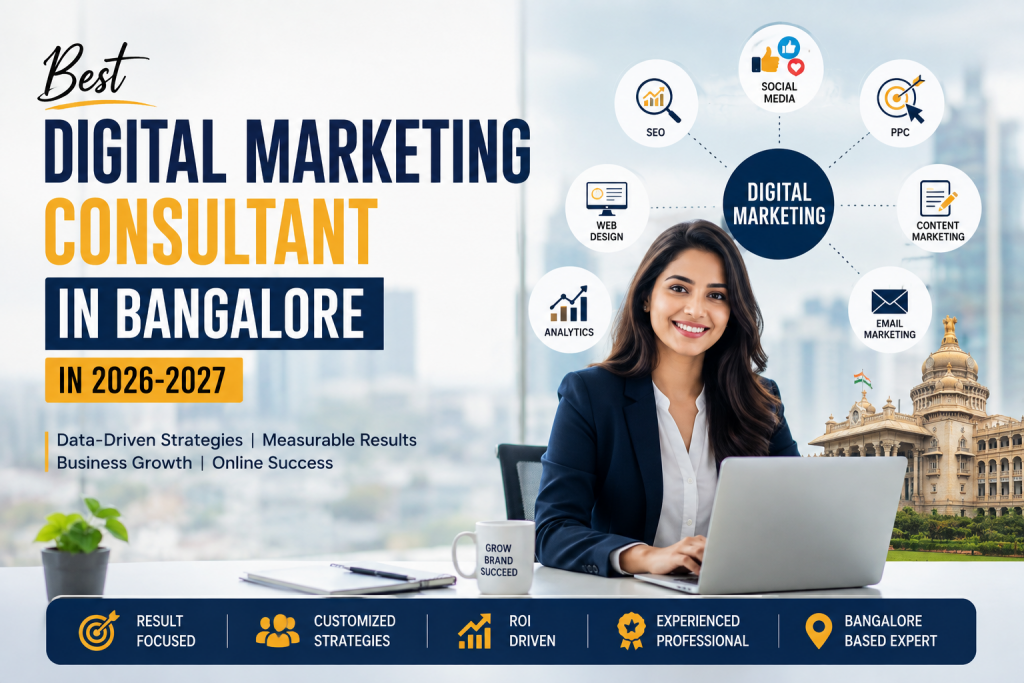
A founder once told me she’d hired three different marketing freelancers over a year, each one good at a specific task like ads or SEO, but none of them able to explain how those pieces fit into a bigger picture. That’s the exact gap digital strategy consulting is meant to fill. It’s not about executing one channel well. It’s about deciding what to prioritise, why, and in what order, so every marketing dollar actually moves the business forward instead of just keeping someone busy.
If you’re searching for the best digital marketing consultant in Bangalore right now, you’re probably somewhere between “we’re doing a lot of marketing activities but not seeing clear results” and “we need someone to actually connect the dots.” Both are common starting points, and both are solvable with the right kind of strategic thinking.
People often ask what is digital strategy consulting expecting a complicated answer, but at its core, it’s the process of aligning a business’s digital efforts (website, content, ads, social, email) with clear, measurable goals. A digital marketing strategy consultant doesn’t just recommend tactics. They look at your entire customer journey, figure out where the biggest gaps or opportunities are, and build a roadmap that prioritises the highest-impact work first.
This is different from hiring a specialist who runs your Google Ads or writes your blog posts. A consultant’s job is to step back and ask whether ads or content or something else entirely is even the right lever to pull for your specific business right now.
These terms get used interchangeably, but they’re not quite the same thing. Digital transformation strategy consulting typically involves broader organisational change, updating internal systems, processes, and sometimes company culture to operate more effectively in a digital-first world. Digital marketing strategy is narrower, focused specifically on how a business attracts, converts, and retains customers through digital channels. Many businesses need both, especially if outdated internal processes are quietly slowing down marketing execution.
Understanding the digital strategy consultant job description helps set realistic expectations before you hire one. A good consultant typically audits your current digital presence and identifies gaps, researches your competitors and market positioning, defines clear KPIs tied to actual business outcomes, builds a prioritised roadmap across channels, and works with your internal team or external vendors to ensure execution stays aligned with strategy. What they generally don’t do is execute every single tactic themselves. Their value comes from the thinking and prioritisation, not from being another pair of hands doing the work.
It’s worth understanding how this role tends to function inside large global consulting environments, since it shapes expectations even for smaller engagements. A digital strategy consultant role at a major consulting firm typically sits at the intersection of business strategy, technology, and marketing, often working on large-scale digital transformation projects for enterprise clients. This is very different from the kind of focused, growth-oriented digital marketing strategy that most small and mid-sized businesses in Bangalore actually need. If you’re a growing business rather than a Fortune 500 company, you generally want someone experienced in practical, revenue-focused strategy rather than large-scale enterprise transformation frameworks.
For those researching this space from a career angle rather than a hiring angle, digital strategy consultant salary ranges vary widely based on experience, city, and whether you’re working in-house, at an agency, or independently. In India, entry-level roles typically start in the ₹6-10 lakh annual range, while experienced consultants with a strong track record and enterprise clients can earn significantly more, especially in metro cities like Bangalore, Mumbai, and Delhi where demand for strategic marketing talent remains high.
Bangalore’s mix of startups, SaaS companies, and D2C brands has created strong demand for consultants who understand fast-moving, resource-constrained businesses rather than slow-moving enterprise processes. When evaluating digital strategy consulting services in the city, look for a few specific things.
Ask for a framework, not just a list of tactics. A strong consultant should be able to explain their prioritisation logic clearly, not just hand you a checklist of things to do.
Look for measurable past outcomes. Vague claims about “improving brand visibility” without specific numbers attached are a sign to dig deeper before committing.
Check whether they understand your specific business model. Strategy for a subscription SaaS product looks nothing like strategy for a one-time-purchase e-commerce brand, and a good consultant should immediately understand that distinction.
Confirm how they’ll work with your existing team. Some consultants prefer to hand off a strategy document and step away, while others stay involved through execution. Neither approach is wrong, but you need to know which one you’re getting before you sign anything.
There’s a meaningful difference between large digital strategy consulting firms built for enterprise clients and smaller, specialised digital strategy consulting companies that work closely with growing businesses. Larger firms often bring more structured frameworks and broader resources but can move slower and cost significantly more. Smaller, specialised firms tend to move faster, offer more direct access to senior strategists, and often understand the specific pressures facing startups and mid-sized businesses more intimately. Neither is inherently better. It depends entirely on your budget, timeline, and how much hands-on involvement you actually need.
A well-built strategy typically starts with a clear picture of who your ideal customer actually is, not a vague, broad target audience. From there, it maps out which channels realistically make sense given your budget and team capacity, rather than trying to be present everywhere at once. It sets specific, trackable goals tied to revenue or qualified leads, not just vanity metrics like followers or impressions. And critically, it builds in regular review points to adjust based on what’s actually working, since even the best initial strategy needs refinement once real data starts coming in.
Any experienced consultant offering digital strategy consulting services should answer these clearly and specifically, ideally with real examples rather than general statements.
Good digital strategy consulting isn’t about having someone who knows every marketing tactic. It’s about having someone who can look at your business honestly, figure out what actually matters right now, and build a clear, prioritised path forward. Whether you’re comparing top digital strategy consulting firms for a large-scale initiative or simply looking for the best digital marketing consultant in Bangalore to bring clarity to your existing efforts, the fundamentals stay the same: clear thinking, honest prioritisation, and a focus on outcomes over activity.
1. What is the difference between a digital marketing agency and a digital strategy consultant?
An agency typically executes specific marketing tasks like ads, SEO, or social media management, while a strategy consultant focuses on the bigger picture, deciding what a business should prioritise and why before any execution begins.
2. How much does digital strategy consulting cost in Bangalore?
Costs vary widely depending on scope and consultant experience, ranging from project-based fees of ₹50,000 to ₹3 lakh for a focused strategy engagement, to ongoing monthly retainers for consultants who stay involved through execution.
3. Do small businesses actually need a digital strategy consultant?
Yes, often more than larger businesses, since small businesses typically have limited budgets and can’t afford to waste resources on the wrong channels. A clear strategy helps prioritise the highest-impact activities first.
4. What qualifications should a good digital strategy consultant have?
Look for a proven track record with measurable results, ideally in your specific industry or business model, rather than just certifications or years of general experience. Real outcomes matter more than credentials alone.
5. How is digital strategy consulting different from digital transformation consulting?
Digital strategy consulting focuses specifically on marketing and customer acquisition, while digital transformation consulting addresses broader organisational and technological change across an entire business, often involving internal systems and processes beyond marketing alone.